
The Longest Hours Deserve the Right Support
Surgeons don’t just work long hours—they perform standing marathons in sterile environments with no cheering crowds. While your focus stays on the scalpel, your body—especially your feet—is silently absorbing stress like a shock absorber with a grudge.
Even with the best shoes in the world, the best insoles for long hours aren’t usually what comes inside them. Most factory insoles are about as helpful as a Post-it note on concrete. And when you’re clocking hundreds of hours in the OR each year, that lack of support adds up—literally.
In fact, the study “How Much Time Do Surgeons Spend Operating?” revealed that surgeons spend an average of 451 hours annually in the operating room—about 22% of their total work year. For high-demand specialties like Cardiothoracic Surgery, that number jumps to 856 hours. That’s a lot of time to be standing still in unforgiving shoes, often on rigid flooring under bright lights and high pressure.
The study also highlights how these hours vary by specialty, with some surgeons performing many short procedures and others handling fewer but far longer cases. Regardless of your specialty, though, your feet don’t care how complex the case is—they just want support. And when your base isn’t stable, neither is the rest of your posture, energy, or endurance.
So if your feet have been silently screaming by hour three, it’s time to stop ignoring them. After all, your OR performance doesn’t just depend on your hands—it starts from the ground up.
Foot Fatigue Isn’t Just Annoying—It’s a Liability

Let’s be real: foot pain mid-surgery is not just uncomfortable—it’s distracting. That dull ache creeping in at hour six? It compromises focus, posture, and stamina.
Here’s what poor foot support can lead to over time:
- Chronic heel or arch pain
- Knee and lower back issues
- Increased risk of fatigue-related mistakes
- Reduced endurance during lengthy operations
So while you’re correcting spines and replacing joints, your own body’s silently waving a red flag.
Not All Insoles Are Created Equal
You’ve probably grabbed a drugstore insole at some point thinking it might help. Spoiler: it didn’t.
| Insole Type | Pros | Cons |
|---|---|---|
| Gel Inserts | Cheap, soft | No real arch support, wears fast |
| Foam Cushions | Comfy for 2 hours max | Compresses quickly, little structure |
| Factory Insoles | Comes with shoes | One-size-fits-no-one |
| Custom-Molded Insoles | Personalized support, long-term | Usually expensive or hard to access |
What you really need is a high-performance insole that’s affordable, moldable, and made for professionals who don’t sit down for a living.
Why Surgeons Are the Ultimate Stress Test for Insoles
If insoles had a stress test, it would be the operating room. You’re:
- Standing still on hard floors for hours
- Frequently pivoting or leaning
- Managing intense focus while ignoring discomfort
Your job demands elite foot performance—not just average comfort. So it only makes sense to look for the best insoles for long hours that are engineered for environments where failure isn’t an option.

Meet BOUNZE Daily Performance: Made for the Demands of Your Shift
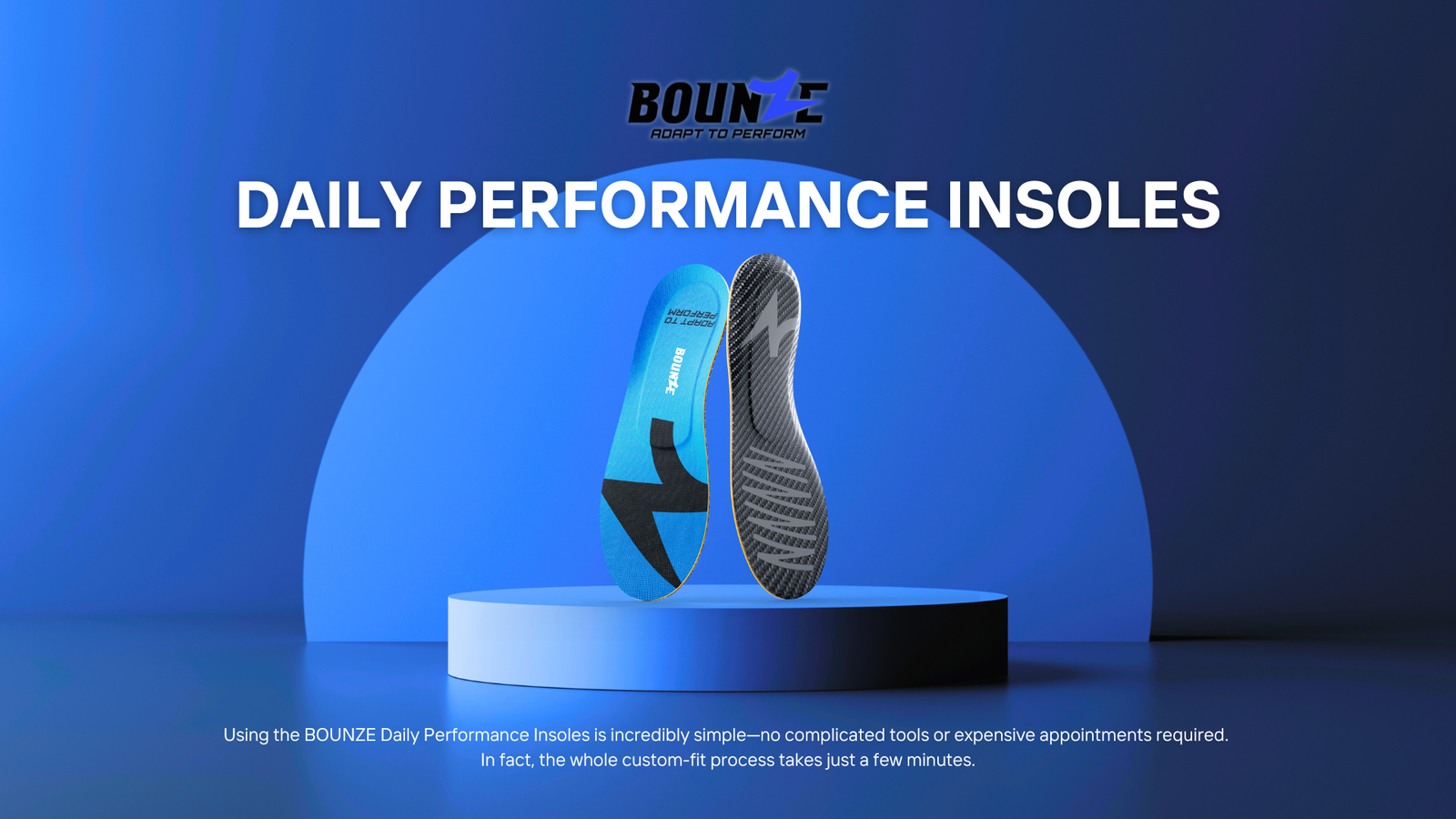
Enter the BOUNZE Daily Performance Insole—designed with professionals like surgeons in mind. Here’s why it’s a smart upgrade:
- 3-Minute Custom Fit: Heat, mold, done.
- Dual-Layer Orxinlite Foam: Cushions and subtly rebounds.
- Structural PETG Shell: Lightweight but strong arch support.
- Moisture-Wicking Top Cloth: Keeps feet dry even in scrubs.
- Anti-Slip Bottom Texture: No insole shifting mid-surgery.
Unlike off-the-shelf inserts, BOUNZE was engineered to perform under daily, high-stress wear—not weekend errands. It might not replace your assistant, but it will definitely support you all the way through back-to-back procedures.
Early Signs Your Feet Are Asking for Help
You don’t have to wait for pain to hit code red. Here’s a checklist to catch early warning signs:
✅ You shift weight often while standing
✅ You feel stiff the moment you sit down
✅ Your feet ache even in supportive shoes
✅ Your lower back gets sore during long surgeries
✅ You’ve thought about bringing a stool to the OR (but didn’t)
Spot any of these? That’s your feet saying they need the best insoles for long hours, stat.
Don’t Wait Until Your Feet Give Out
Here’s the bottom line: your feet are your foundation, and they’re quietly bearing the weight of your entire career. Choosing the best insoles for long hours isn’t a luxury—it’s part of being at your best in the OR.
The BOUNZE Daily Performance Insole is more than just comfort—it’s a smart investment in your health and focus. You protect others every day. It’s about time something protected you.